Homepage Image Strategy by Industry: Barbershop, Restaurant, Spa & More (2026 Guide)
Learn which images your homepage actually needs by industry -- restaurant, barbershop, spa, cafe -- with photography styles, budget tiers, and real examples.
Homepage Image Strategy by Industry: From Barbershop to Fine Dining
83% of consumers trust a business more when its website uses real photos of its people, space, and products -- yet the most popular stock image in any given industry has already appeared on 300+ other websites, including your direct competitors. The fix is not simply "take better photos." It is understanding which specific images your industry needs, in which order, and at what budget level they become worth the investment.
This guide breaks down the visual strategy for five distinct industry categories -- restaurants, barbershops, spas, coffee roasteries, and boutique retail -- with concrete photography styles, budget tiers from $0 to $3,500, and the specific mistakes that damage credibility in each vertical.
 Photo by
 Why Generic Imagery Costs You More Than You Think
The problem with stock photography is not that it exists. The problem is that your visitors have already seen it -- on your competitor's site, on the business down the street, and on three different results from the same Google search.
According to the Content Marketing Institute, the top 100 most downloaded business stock images each appeared on an average of 300+ websites, frequently within the same industry. That creates the exact brand equivalence that your homepage is supposed to prevent. When your hero image is the same handshake photo that a visitor saw two tabs ago, you are not communicating anything about your business. You are communicating that you did not invest in communicating.
The commercial impact is direct. A 2023 Edelman Consumer Trust Survey found that 65% of respondents stated that recognizing stock photography on a business website negatively impacted their perception of that brand's credibility. This is not ambivalence. It is active damage -- the moment a visitor identifies a photo as stock, trust is broken rather than merely unaffected.
The flip side is equally measurable. Websites featuring authentic local photography demonstrate 42% longer time-on-site, 35% lower bounce rates, and 58% more page views per session compared to stock-image equivalents in A/B testing. Landing pages with authentic business imagery show 35% higher conversion rates. Real team photos replacing stock produce a 29% increase in form completions on the same landing page.
Trustworthiness judgments are also formed faster than most designers realize. Research by Princeton University's Willis and Todorov found that trustworthiness judgments based on imagery are formed in one-tenth of a second and are not meaningfully revised by longer exposure. That makes authentic photography the highest-leverage first-impression investment a service business can make. Stanford Web Credibility Research backs this up: websites featuring actual business locations and real team members receive 4.5x higher credibility ratings than those using generic imagery.
The counterpoint is worth acknowledging. The problem is not stock photography in principle -- it is over-used, over-licensed stock imagery. A small business with a $0 photography budget can curate thematically consistent, lower-duplication stock images from platforms like Unsplash and Pexels as a legitimate interim strategy. As Stock Photo Secrets notes, the difference is between generic over-licensed stock that triggers recognition fatigue and professionally produced, less-used stock that does not carry the same risk. If you cannot afford custom photography today, curating less common stock is a valid bridge -- but it is a bridge, not a destination.
The Four-Layer Visual Hierarchy Every Restaurant Homepage Needs
Restaurant homepages that consistently convert visitors into reservations follow a deliberate visual sequence. It is not random. It answers four distinct visitor questions in order, before the visitor consciously forms them.
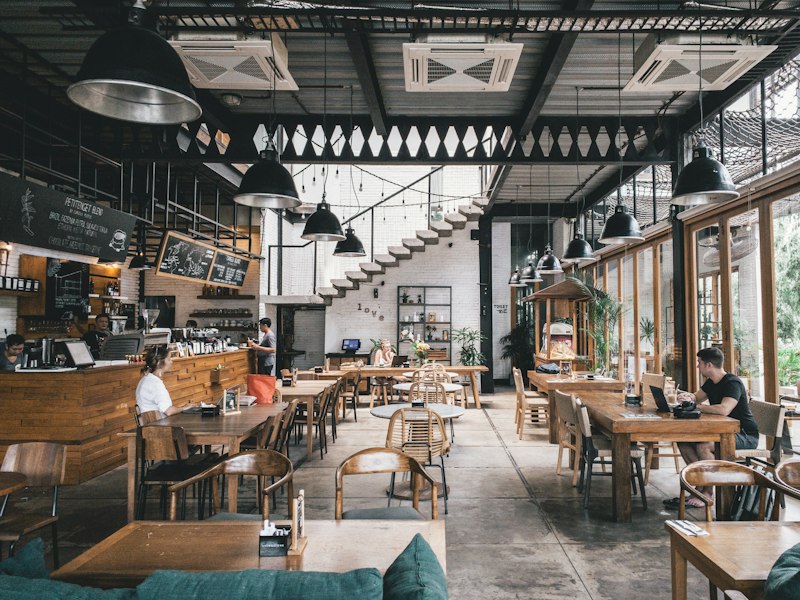
The framework, documented in the Sarma restaurant case study, works in four layers:
Layer 1 -- Atmosphere (Hero). The hero image establishes the feeling of the space. This is not a food photo. It is a full-screen interior ambiance shot or signature dish that answers: "What kind of place is this?" Sarma uses a full-screen hero slideshow to establish atmosphere as the first impression before any menu or reservation information appears.
Layer 2 -- Appetite (Food Close-ups). High-resolution food photography with visible texture, steam, and color activates a physiological appetite response within milliseconds of scrolling. Aquarius Seafood leads its entire homepage with dish photography positioned above the fold -- prioritizing appetite stimulation before any brand information.
Layer 3 -- Ambiance (Interior Confirmation). Bar area and dining room interior shots confirm that the physical environment matches the quality signaled by the food. This is where visitors decide whether the restaurant fits the occasion they have in mind.
Layer 4 -- Authenticity (Team/Chef Portraits). The final layer adds human connection -- chef and kitchen team portraits that give the restaurant a face and a story.
This four-layer approach moves visitors from initial interest to reservation intent without relying on stock imagery at any stage. Farmacy restaurant extends this further by including farm imagery through kitchen preparation to plated dishes, turning the homepage into a values statement rather than a menu display.
Photography Trends for Restaurants in 2025-2026
Two shifts are reshaping restaurant homepage photography. First, natural, soft window light has replaced harsh shadows and studio-lit perfection as the dominant food photography style. The aesthetic communicates texture, warmth, and sensory presence -- which is exactly what a restaurant homepage needs to sell.
Second, static imagery alone is no longer sufficient. Network Solutions identifies micro-video content -- short looping clips of plating, steam, or atmosphere -- as a baseline expectation for credibility and engagement in the food service category.
Color psychology also matters at the segment level. Fine dining uses dark palettes to convey sophistication. Juice bars and cafes use bright imagery for energy. Brewery sites use earthy, calming tones. The visual language must match the price point and emotional register of the specific business.
Budget Tiers for Restaurant Photography
| Tier | Investment | What You Get |
|---|---|---|
| DIY | ~$50 one-time | Smartphone + ring light + white foam board reflector. Credible food photography with the primary investment being time and natural light access. |
| Mid-range | $400--$800 | Local food photographer, half-day shoot. Professional results without full commercial food styling costs. Highest ROI tier for most independent restaurants. |
| Professional | $1,500--$3,500 | Full commercial food photography with styling. Warranted when you need assets for press, aggregator platforms, and high-volume contexts. |
The ROI math is real: a documented case study showed that a $1,200 boutique photography investment produced a 35% conversion rate increase within six months, generating $8,000 in additional revenue -- a 667% return on the photography spend.
Barbershop and Grooming: The Case for Imperfection
The visual language of authenticity in the barbershop industry comes from a place most industries would avoid: imperfection.
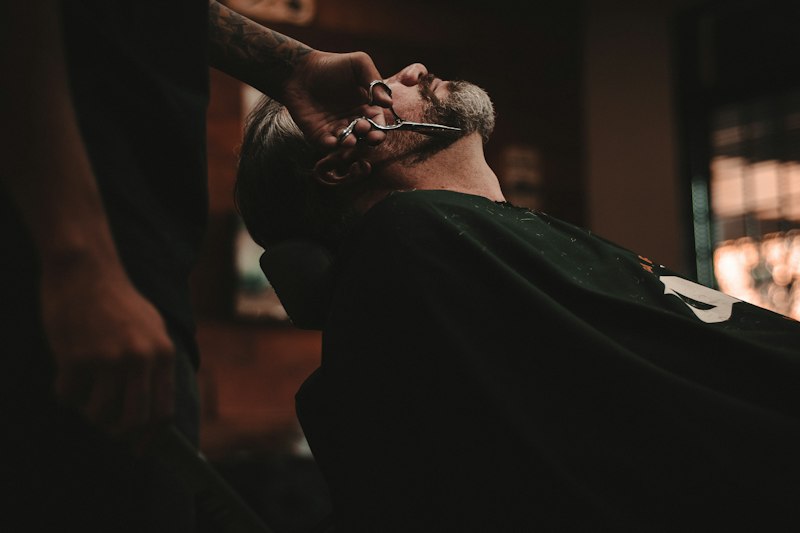
Documentary photographer Rob Hammer spent 15 years photographing real American barbershops -- worn chairs, hand-painted signage, aging tools. His barbershop photography project demonstrates that heritage signals outperform template imagery in this category. The visual language of a real barbershop is not clean, modern, and polished. It is specific, historical, and textured. That specificity is exactly what builds trust.
The two highest-trust image categories for barbershop websites, identified by Creating a Website Today, are before-and-after haircut documentation and in-session action shots showing the craft actively in progress. These images serve a dual function: they demonstrate competence (proof of work) and they communicate atmosphere (what it feels like to be in the chair).
Monochrome photography and minimalist visual layouts are the dominant stylistic trend in the barbershop category for 2025-2026. The choice is deliberate -- it signals timelessness and craft authority, separating an authentic barbershop from a generic grooming chain. High contrast, close detail shots of technique, and dark or warm tones complete the visual vocabulary.
Here is the counterpoint that matters. A real, slightly imperfect photo of an actual barbershop chair often outperforms a slick studio shot of a generic grooming setup -- even when the DIY image lacks technical polish. As David Arnold Photography notes, in industries where environmental authenticity matters more than technical perfection, a smartphone photo of your actual shop beats a professionally lit photo of someone else's. The most authentic barbershop images cost nothing to make because the barber already has everything needed: the space, the tools, the chairs, and the natural light coming through the front window.
Budget Tiers for Barbershop Photography
| Tier | Investment | What You Get |
|---|---|---|
| DIY | $0 | Smartphone portrait mode with natural window light. The most authentic images in this category often require no equipment beyond what the barber already owns. |
| Mid-range | $200--$500 | Local portrait photographer, 2-hour session. Produces editorial-quality documentation of craft, shop character, and individual barber portraits. |
| Professional | $800--$1,800 | Brand photographer with styling and editorial treatment. Worth the investment for multi-location shops building a consistent brand identity. |
What to avoid: Clean, overly modern stock barbershop images that erase heritage signals. If the photo could belong to any barbershop in any city, it is not doing its job.
Spa, Wellness, and Salon: Selling a Feeling Before a Service
Spa and wellness homepages face a unique challenge: they need to sell a sensory experience through a screen. The visitor cannot feel the warmth of the stones, smell the botanical oils, or hear the ambient sound design. Every image on the page is a sensory surrogate -- and the hero image sets the emotional register for everything that follows.
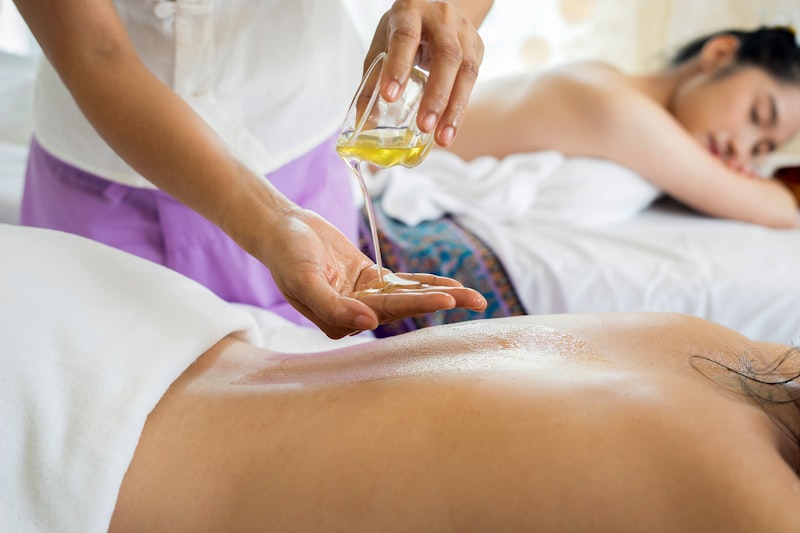 Photo by
 The hero image for a spa or wellness homepage should communicate calm, care, and sensory quality before any service or price information appears. This is not a luxury -- it is a category requirement. Visitors arrive at spa websites already in a state of aspiration. They want to feel the experience before they book it. A serene interior or treatment environment photographed in soft natural light with a muted, earthy palette is the visual entry point that performs.
Transformation documentation -- before-and-after photography and in-process video content -- is the highest-performing content type for salon and spa businesses. According to Shopify's salon marketing analysis, transformation content has higher social sharing rates and longer dwell time than team portrait or service description layouts. It serves a dual function: portfolio evidence and implicit testimonial. Showing a result is more persuasive than describing one.
Texture close-ups are the secret weapon of spa visual strategy. Stones, botanicals, oils, towels -- these images function as sensory surrogates that communicate quality and care in the absence of physical presence. They answer a question the visitor may not consciously ask: "Will this place feel as good as it looks?"
What to avoid: Generic lotus flower and candle stock photos. Clinical lighting. These are the category-specific errors that most damage credibility in the spa segment because they signal template-level investment rather than genuine brand identity. If your spa hero image came free with your website template, your visitors can tell.
Illustrative and Abstract Visual Alternatives
Not every wellness brand needs to rely on photography alone. Smashing Magazine's global design roundup documents how custom illustration, hand-drawn elements, and brand-specific abstract visuals can achieve the same trust-building result as documentary photography -- particularly for wellness brands with values-driven positioning. Japanese and European craft industries demonstrate that visual authenticity takes many forms beyond literal photos.
The trade-off is maintenance. As Webstacks notes, custom illustration carries a consistency burden that photography does not. Photography can be updated with new shots at any time. An illustration system requires a designer for every new page, product, or seasonal update. For a spa that refreshes its menu seasonally, that ongoing cost needs to be part of the calculation.
Budget Tiers for Spa Photography
| Tier | Investment | What You Get |
|---|---|---|
| DIY | $0--$100 (props) | Lifestyle photography with diffused window light. Focus on textures, treatment room details, and botanical arrangements. |
| Mid-range | $500--$1,000 | Interior/lifestyle photographer, half-day. Professional-quality treatment room and atmosphere shots. |
| Professional | $1,500--$4,000 | Brand lifestyle photographer with model. Full sensory narrative for premium positioning. |
Coffee, Retail, and Specialty Businesses: Origin, Craft, and Curation
Coffee roasteries, boutique retail stores, and specialty businesses share a common visual challenge: they need to differentiate a curated experience from an anonymous product listing.
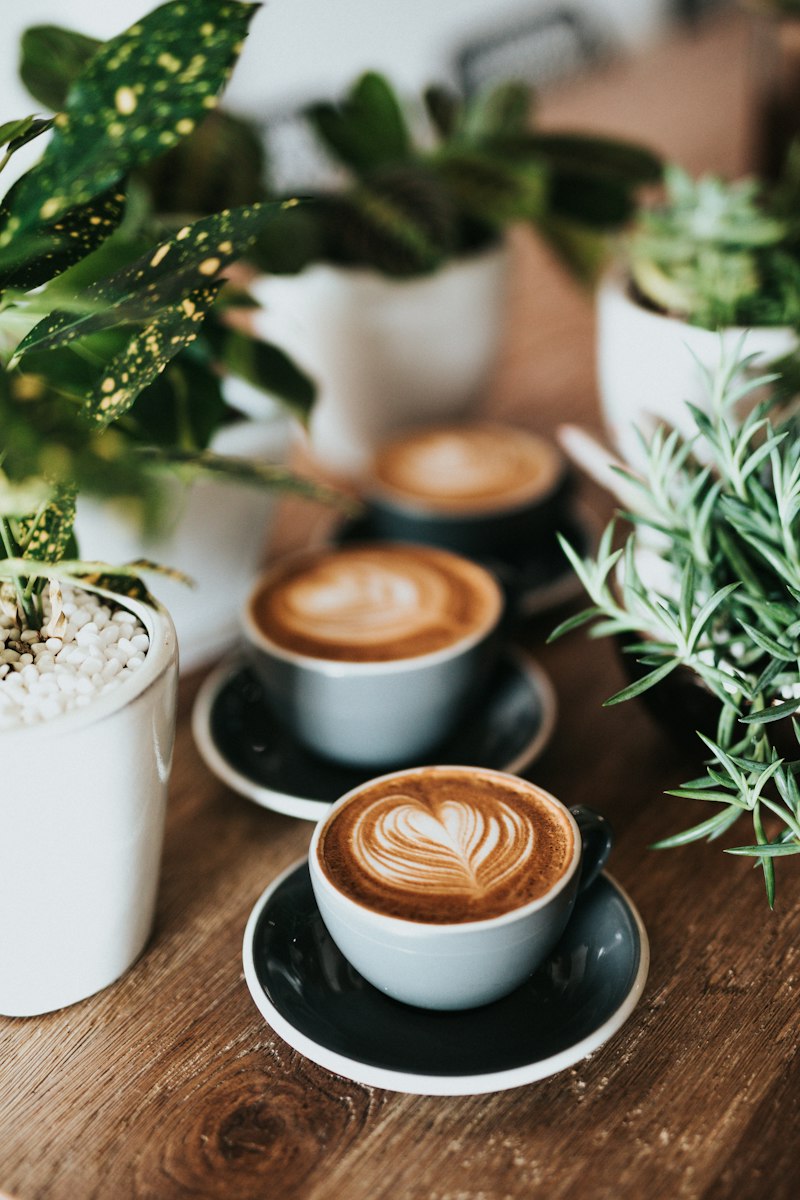
For coffee roasteries and specialty cafes, the hero image should communicate product origin and craft process -- the roasting operation, the pour, the beans -- rather than the generic "cup on table" composition that saturates the category. The photography style that performs in this vertical is natural light, warm amber tones, and shallow depth of field that draws attention to process and texture.
Boutique retail and vintage store homepages require something most e-commerce sites skip: the human behind the curation. Supporting imagery should include the owner or staff interacting with product. This is the visual signal that transforms a curated selection from an anonymous catalog into a personal recommendation. Without it, a boutique homepage looks like any other online store.
Shopify's homepage design principles articulate the underlying mechanism: lifestyle photography and visual storytelling are the most effective trust mechanisms for product and service businesses. Images must communicate a world the visitor wants to enter, not merely depict a product offering. Brand narrative built through imagery converts at a higher rate than specification-first layouts.
Custom illustration is an underused option in the specialty business category. As Webstacks points out, while photography shows what a business has, illustration shows what a business is -- its personality, values, and character. A custom illustration style creates a visual identity that cannot be replicated by a competitor purchasing the same stock license. For specialty businesses built on differentiation, that irreplicability is strategic value.
And the stakes are high. Websites with compelling visuals receive up to 94% more views than text-only or visually sparse pages. For food-industry and specialty retail sites especially, visual investment is a measurable growth lever, not an aesthetic preference.
Practical DIY Visual Strategy for Specialty Businesses
You do not need a professional photographer to start. Smartphone macro mode produces credible coffee bean and product close-up photography at $0 cost. The primary skill required is understanding light direction, not owning professional equipment. Place your product near a window in the morning, use your phone's macro or portrait mode, and you have the beginning of an authentic visual library.
For boutique retail, flat lay photography with natural light and brand-colored backgrounds is the highest-leverage DIY technique. It creates editorial-quality product imagery at $0--$50 one-time cost while establishing consistent brand color presence. A roll of colored paper, natural window light, and a smartphone will produce better results than any stock image of a generic retail display.
Budget Tiers for Coffee and Retail Photography
| Tier | Investment | What You Get |
|---|---|---|
| DIY (Coffee) | $0 | Smartphone macro mode for product shots. |
| DIY (Retail) | $0--$50 | Flat lay photography with natural light and brand-colored backgrounds. |
| Mid-range (Coffee) | $300--$700 | Local commercial photographer, 3-hour session. Product + roasting process documentation. |
| Mid-range (Retail) | $400--$900 | Local lifestyle photographer, half-day. Product-in-context + store interior. |
| Professional (Coffee) | $1,000--$2,500 | Brand photographer with full product + lifestyle treatment. |
| Professional (Retail) | $1,200--$3,000 | Full brand identity shoot with model and art direction. |
What to avoid (Coffee): Generic coffee cup and latte art stock that every cafe uses. What to avoid (Retail): Product-only shots on white backgrounds with no context -- that visual language says "e-commerce warehouse," not "curated boutique."
Putting It All Together: The Industry Visual Audit
Every industry has a specific visual language that communicates credibility before a single word is read. Restaurants need a four-layer visual hierarchy that moves visitors from atmosphere to appetite. Barbershops earn trust through craft documentation and intentional imperfection. Spas sell a sensory world through texture and transformation. Specialty businesses differentiate through the human behind the curation.
Across all categories, one finding is consistent: authenticity -- not technical perfection -- is the primary conversion driver. The most cost-effective authentic image is almost always one taken in the actual business space rather than sourced from a stock library. As Nielsen Norman Group puts it plainly: generic stock photos that add no real content to the page should be avoided entirely.
Here is your action step. Audit your homepage against the visual framework for your specific industry. Identify which of the four image categories -- hero, supporting close-up, interior/environment, and team/people -- you are currently missing or substituting with generic stock. Then start with the DIY budget tier for that one gap. A smartphone and natural window light is a better starting point than any stock license. Your visitors will notice the difference in one-tenth of a second, and they will not revise that judgment.
References:
- Authentic vs. Stock Photography: The Data Behind Visual Content
- Restaurant Website Design Inspiration
- Creative Food Photography Trends for 2026
- Best Restaurant Website Designs 2025
- Barbershop Website Design Analysis
- Rob Hammer Barbershop Photography
- DIY vs. Professional Website Photography
- Salon Marketing Strategy -- Shopify
- Shopify Homepage Design Principles
- DIY vs. Professional Photography ROI
- Smashing Magazine: Web Design UX Showcases
- Webstacks: Modern Website Design Trends 2025
- Stock Photo Secrets: Stock Image Strategy
- NNGroup: Homepage Usability Guidelines
- Princeton Willis & Todorov Trust Study
#homepage-image-strategy #industry-website-photography #authentic-homepage-visuals #restaurant-website-photography #barbershop-website-images #small-business-homepage-design #DIY-business-photography